
Buying curtains in the UK looks simple until you meet two numbers such as 168 x 228 cm and have to decide whether they describe the window, the pair, or each curtain. That is where many measuring mistakes begin. The safest approach is to measure the pole or track first, decide how full you want the curtains to look, and then choose the drop. Do not order from the glass or frame measurements alone unless you are also planning the hardware from scratch.
Start with the pole or track, not the window
If a pole or track is already fitted, measure its usable width. For a pole, measure from one end to the other but exclude decorative finials. For a track, measure the full running length used by the gliders. This gives you the width the curtains actually need to cover.
If nothing is fitted yet, plan the hardware before buying curtains. A common UK approach is to extend the pole or track beyond the window so the curtains can stack back without blocking too much daylight. Roughly 15 to 20 cm beyond each side is a useful starting point for many standard windows, although the room layout and fixing position should decide the final measurement.
Understand what the width on the packet means
Do not assume every retailer labels curtain width in exactly the same way. Many UK ready-made curtains are sold as a pair and the stated width refers to each individual curtain, but some products are sold as single panels. Always read the product specification before ordering.
Next, calculate fullness: the amount of fabric compared with the width it must cover. Around 2x fullness gives a classic gathered look for many ready-made styles, while 2.5x creates deeper folds. Lighter curtains may work with less fullness depending on the heading and the look you want.
A simple curtain width calculation
Suppose your pole measures 180 cm, excluding finials. At 2x fullness, you need about 360 cm of curtain width in total. If you are buying a pair, that means roughly 180 cm per curtain. A pair listed as 168 cm wide per curtain would give 336 cm total, while a 228 cm pair would give 456 cm. The better choice depends on the fabric, heading and desired fullness.
A curtain width calculator can save time, but enter the pole or track width rather than only the window frame width. Also check whether the result is total fabric width or the width required for each panel.
How to measure the curtain drop
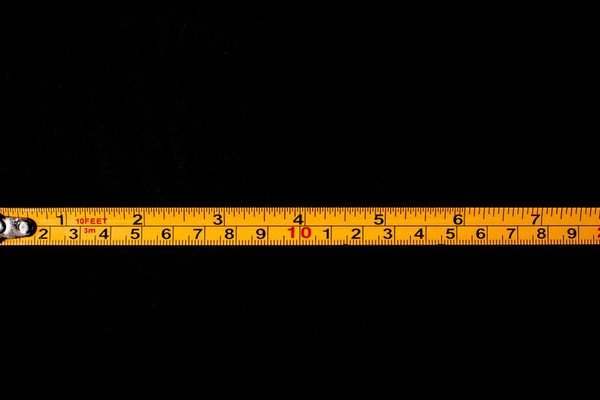
Curtain drop measurements depend on the heading style and where you want the hem to finish. Use a steel tape measure and start from the correct hanging point.
Eyelet curtains
For eyelet curtains on a pole, measure from the top of the pole down to the intended finishing point. Eyelets sit differently from hooked headings, so measuring from a curtain ring would give the wrong drop.
Pencil pleat and hooked headings
For pencil pleat curtains hanging from rings on a pole, measure from the eye of the curtain ring. If they hang from a track, measure from the top of the track or use the position specified by the manufacturer.
Choose the finishing point
For sill-length curtains, a practical finish is around 1 cm above the sill. For curtains below the sill, around 15 cm below is a common guide if there is no radiator or furniture in the way. Floor-length curtains often finish about 1 cm above the floor. For a deliberate puddled look, allow a few extra centimetres so the fabric rests on the floor.
Measure the drop in two or three places, especially in older homes where floors and openings may not be level. If the figures differ, choose the measurement that best suits the intended finish and remember that ready-made curtains may still need hemming.
What changes when measuring bay window curtains?
Bay window curtains need more care because the curtain does not travel in a straight line. If a track is already fitted, measure along the actual route of the track around the bends. Do not measure straight across the front of the bay, because that shortens the true running length.
For a new bay track, measure the bay in sections and record the route around each corner. Flexible tracks are often measured from the centre outwards, following the line the track will take. For a bay pole, measure each straight section separately. Add the sections together, then use that total as the basis for the fullness calculation.
For example, imagine a three-sided bay with sections of 90 cm, 160 cm and 90 cm along the planned track line. That is 340 cm before any extra return or stacking allowance. At 2x fullness, the curtains need roughly 680 cm of fabric width in total. This is why bay window curtains can require much more fabric than the front-facing width suggests.
Common measuring mistakes that lead to the wrong size
The biggest mistake is measuring the window instead of fitted hardware. Another is treating a packet width as the total pair width without checking the retailer’s specification. Shoppers also forget that different headings start from different points, or choose a standard drop before checking the actual distance to the sill or floor.
Write down three separate figures before shopping: pole or track width, desired fullness, and finished drop. Keeping them separate makes product comparisons easier and prevents width and drop from being mixed up.
FAQs
Do I measure curtains from the window frame?
Usually no. If the pole or track is installed, measure that instead because it determines the area the curtains must cover. Measure the window itself mainly when planning new hardware.
How much wider should curtains be than the pole?
For many ready-made curtains, around twice the pole or track width gives a balanced gathered look. A fuller effect may use about 2.5 times the width. Check the heading and retailer guidance before ordering.
Should floor-length curtains touch the floor?
They do not have to. A neat everyday finish is about 1 cm above the floor. Curtains can also touch the floor or deliberately puddle by a few centimetres, although puddling needs more maintenance.
What if my measurement falls between two ready-made drops?
Choose the option that can be altered to your preferred finish. A slightly longer curtain can often be hemmed, whereas a curtain that is too short is harder to correct. For awkward proportions or complex bays, made-to-measure curtains may be the cleaner solution.
Measure the space, then check the product
Accurate curtain measuring is a two-stage job. First, measure the physical space from the correct pole or track reference point. Second, check how the retailer defines width, drop and the number of panels in the pack. When those two sets of information match, choosing curtains becomes far more predictable and you are much less likely to return a pair that looked right on the label but wrong at the window.