
Rented homes come with a familiar challenge: you want the flat to feel like yours without turning a decorating choice into a deposit dispute later. The best renter friendly decor ideas add colour, texture and personality without permanent alterations, and they can usually be reversed when you move.
Before changing anything, read your tenancy agreement and check what it says about decorating, fixtures and alterations. If you are unsure, ask the landlord or letting agent in writing. Rules vary across the UK, but damage beyond normal wear and tear can lead to deposit deductions. Take dated photos of walls, floors and fittings before you start, especially where there are existing marks.
Start With Furnishings You Can Take With You
When decorating a rented flat, focus first on things you own. Curtains, cushions, throws, rugs, lamps, mirrors and freestanding furniture can change a room without altering the building, and they can move to your next home.
For a coordinated look, choose one base neutral, one main colour and one smaller accent colour. Repeat those tones across textiles, artwork and accessories. Even a plain rental can feel intentional when the furnishings share a clear palette.
Create Temporary Wall Decor Without Drilling
Blank walls can make a rented flat feel unfinished, but screws and wall plugs are not the only answer. Lightweight art may suit removable picture-hanging strips if the wall finish and instructions allow it. Test adhesive in an inconspicuous place first because weak paint can still lift during removal.
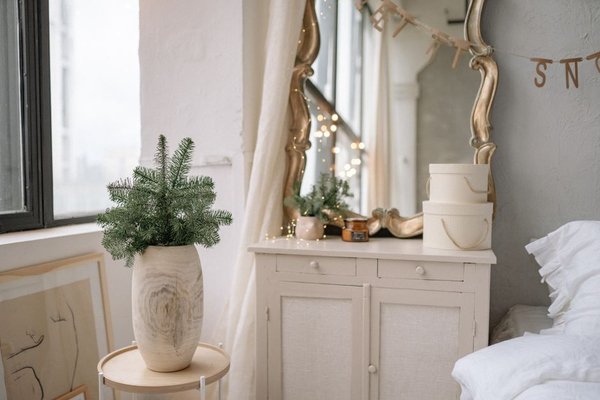
For genuinely no drill decor, lean framed prints on a console, mantel or sideboard. Freestanding ladder shelves, bookcases and display units also give you vertical space without fixing anything to the wall. A large framed print behind a table lamp can look just as deliberate as hung artwork.
Bring Pattern In With Textiles
A patterned throw, decorative screen, bold curtains or an upholstered headboard can soften plain walls and introduce colour without changing the property itself. This works particularly well in bedrooms, where rental finishes can feel impersonal.
Use Peel-and-Stick Products Cautiously
Peel-and-stick wallpaper can create an instant feature, but “removable” does not guarantee zero damage. Adhesion varies with paint type, surface preparation, humidity and how long the material remains in place. If your tenancy permits it, test a small section for several days before covering a whole wall.
A lower-risk alternative is to apply removable wallpaper to something you own. Cover the back panel of a freestanding bookcase, a plain tabletop or lightweight boards that can be leaned against a wall. You still get the impact of temporary wall decor without bonding material directly to the landlord’s paint.
Hide Tired Flooring With a Large Rug
A well-sized rug can transform a rental quickly. It hides worn carpet or bland laminate, adds warmth and helps define zones in an open-plan flat. In a living room, choose one large enough for at least the front legs of the main seating to sit on it. A very small rug can make the space feel more cramped.
If the existing carpet is patterned, choose a quieter rug. If the floor is plain, you can use stronger colour or pattern. Check that any rug pad or non-slip underlay is suitable for the surface underneath and will not stain it. A guide to choosing the right rug size would also make a useful internal link from this section.
Improve Lighting Without Rewiring
Rental lighting is often functional rather than flattering. Instead of changing fixed fittings, create layers with plug-in lamps. A floor lamp beside the sofa, a table lamp on a sideboard and a bedside lamp can make a room feel warmer without electrical work.
Choose bulbs that suit the fitting and never exceed its rated wattage. Warm white light is often comfortable in living rooms and bedrooms, while work areas may need brighter task lighting. Plug-in wall lamps can also be useful where their installation does not require permanent changes.
Use Furniture to Disguise What You Cannot Change
Some rental features are easier to distract from than improve. A bland corner can become a reading spot with an armchair, lamp and small table. An awkward wall can be softened with a tall plant or narrow bookcase. Rather than pushing everything against the walls, create small functional zones and keep clear walking routes.
If space is tight, furniture placement matters as much as decoration. A related guide to small living room layout ideas would be a natural internal link here.
Refresh Kitchens and Bathrooms With Accessories
Kitchens and bathrooms can tempt renters into permanent upgrades, but accessories still make a noticeable difference. In the kitchen, use a washable runner, countertop storage, matching tea towels and a freestanding trolley. In the bathroom, focus on towels, a bath mat, shower curtain, baskets and freestanding shelving.
Photograph each area before making changes and keep original removable items in a labelled box. If you replace a lampshade, curtain or other non-fixed item with permission, storing the original makes it easier to restore the room before checkout.
Use a Move-Out Test Before Buying Decor
Before buying or fitting anything, ask one question: how will this leave the property? If removal involves filler, repainting, specialist solvent or repairing a surface, it may not be as renter-friendly as it first appears. If the item can be lifted, unplugged, folded, packed or carried away, it is usually a safer investment.
This approach also protects your budget. Instead of spending heavily on improvements you cannot take with you, you build a collection of furnishings that can work in future homes. Budget decorating ideas would be another relevant internal-link opportunity for renters planning a gradual refresh.
Frequently Asked Questions
Can I decorate a rented flat without asking the landlord?
You can generally use your own freestanding furniture, rugs, lamps and accessories, but alterations to the property should be checked against your tenancy agreement. For painting, drilling, changing fittings or attaching materials to surfaces, written permission is the safest approach.
Can removable adhesive strips damage paint?
Yes. Results depend on the wall finish, paint condition, product and removal method. Test a hidden area first and follow the manufacturer’s instructions rather than assuming a removable product is risk-free on every surface.
Is peel-and-stick wallpaper renter friendly?
It can be, but only where the wall surface and tenancy terms make it suitable. Test before covering a large area. For less risk, apply it to furniture or boards you own instead of directly to the wall.
What are the easiest renter-friendly changes to reverse?
Rugs, curtains, cushions, throws, freestanding mirrors, plants, lamps, movable storage and artwork displayed on furniture are among the easiest changes to remove. They can make a flat feel personal while leaving the property itself largely untouched.
Make the Flat Feel Personal, Not Permanent
The most successful renter friendly decor ideas do not depend on drilling holes or making structural changes. They rely on colour, lighting, textiles, furniture placement and carefully chosen temporary details. By checking your agreement, testing products before use and planning how every change will be reversed, you can create a home that feels considered while keeping move-out day far less stressful.