A tidy pantry is less about matching jars and more about knowing what is available before you start cooking or shopping. The best pantry organisation ideas make everyday ingredients easy to find, give older food a fair chance of being used and prevent spare packets from disappearing at the back. You can build that system in a full-height larder, a single kitchen cupboard or a few shelves above the worktop. The trick is to organise around how your household actually eats.
Start with a food stocktake, not a shopping trip
Before buying baskets, take everything out of the pantry and group similar items on a clean surface. Check packaging for damage, signs of pests and storage instructions. Put anything that needs refrigeration in the fridge rather than returning it to a cupboard. Wipe shelves and let them dry completely before restocking.
Next, make three groups: food you use regularly, occasional ingredients and unopened extras. Look for duplicate bags of rice, half-used pasta packets and tins purchased for recipes you never made. This quick audit gives you a realistic picture of what your pantry storage needs to hold. It also stops you spending money on organisers that do not fit your food.
Make a small use-first area
Set aside a shallow basket for items you want to use soon, such as an opened packet of crackers or a tin nearing its best-before date. The basket is a planning reminder, not a place for unsafe food. The UK Food Standards Agency distinguishes best-before dates, which concern quality, from use-by dates, which concern safety. Never eat food after its use-by date, and always follow its storage instructions.
Divide shelves into practical food storage zones
A good kitchen pantry system groups ingredients according to the meals and routines they support. It should answer a simple question: where would someone naturally look for this? You need clear food storage zones rather than a perfect arrangement that only one person understands.
Try these everyday zones
Keep breakfast foods together, including porridge oats, cereal and spreads. Put pasta, rice, noodles and pulses in a meal-staples zone. Give tins and jars their own section, preferably with labels facing forward. Reserve another area for baking ingredients, and a smaller one for snacks or lunchbox items. Tea and coffee can stay near the kettle if that is more convenient than keeping them in the pantry.
Put frequently used food in the easiest places
Place everyday ingredients at eye level or within comfortable reach. Heavy jars, large bags and spare tins belong on sturdy lower shelves, where lifting is safer. Keep lightweight, rarely used items higher up. Avoid storing food directly beside a heat source or in a damp cupboard; follow the conditions stated on each package.
Choose containers for function, not appearance
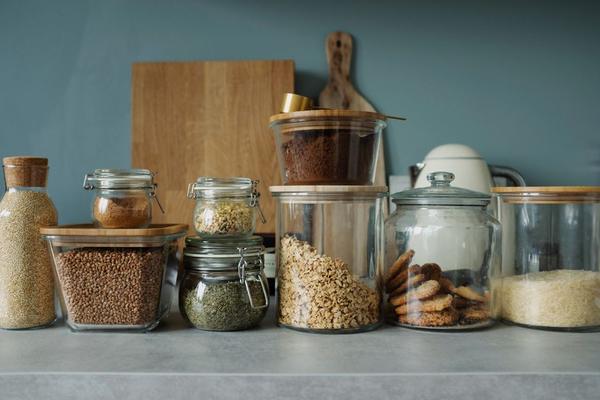
Clear, airtight food-safe containers can make flour, cereals and dry pasta easier to see and protect after opening. But decanting everything is unnecessary. Tins, sealed jars and sturdy boxes often store perfectly well in their original packaging. Start with problem foods: bags that spill, packets that will not reseal or small items that repeatedly get lost.
Keep essential information when decanting
Label containers with the food name, particularly where ingredients look alike, such as plain and self-raising flour. Retain the original label or record relevant allergen information, date marking and cooking or storage instructions. If combining a new purchase with an older batch, you could lose track of the earliest date, so finish the older contents first instead.
Build rotation into the way you unpack shopping
When new groceries arrive, move the older matching items towards the front and place newer ones behind. This simple first-in, first-out habit helps prevent forgotten packets. It works particularly well for tins, breakfast cereals and dried foods, although product dates and storage instructions should always take priority.
Consider a practical example: you buy pasta every Friday, but one nearly empty packet is hidden behind three unopened bags. Give pasta one designated area and keep the opened packet at the front. Before writing pasta on the next shopping list, glance at that zone. You have made the decision easier without keeping a complicated spreadsheet.
Use a simple inventory to prevent duplicate buying
For many households, an elaborate pantry inventory is harder to maintain than the pantry itself. Keep a small note on the inside of the cupboard door or a shared phone list for ingredients you buy in bulk. Record only what matters, such as two spare bags of flour or one unopened jar of peanut butter.
Pair this with a five-minute check before the weekly shop. Look through your use-first basket, check staple quantities and plan a meal around ingredients already open. These habits fit naturally alongside meal planning for busy families and can reduce the chance of buying food that never gets eaten.
Make awkward cupboards easier to use
Deep shelves are notorious for hiding food. Use shallow, removable baskets rather than pushing loose packets to the back, and label the front of each basket. On narrow shelves, arrange tins in single rows when possible. A turntable may help with small jars, provided it fits securely and does not overload the shelf. For more cramped spaces, small kitchen storage ideas should prioritise visibility over squeezing in extra packets.
Keep the system working with a short weekly reset
Choose a repeatable moment, perhaps just before writing your shopping list. Return stray packets to their zones, check opened items, wipe up crumbs and bring older stock forwards. Once a month, inspect less-used ingredients and clean shelf corners. This takes less effort than repeatedly emptying an overfilled cupboard and is a useful habit when organising kitchen cupboards elsewhere.
Frequently asked questions
How do I organise a pantry on a budget?
Begin by grouping food and reusing clean, suitable containers you already own. Shoebox-sized baskets or spare trays can separate packaged items, provided they are clean and appropriate for the location. Buy specialist organisers only after identifying a recurring problem.
What should go on the top shelf of a pantry?
Store lightweight, infrequently used items there if you can reach them safely. Avoid placing heavy tins, large glass jars or anything you need daily above shoulder height.
Is it better to keep dry food in its original packaging?
Either method can work. Original packaging preserves instructions and date information, while suitable sealed containers help with opened dry goods. Whichever you choose, keep labels and follow the manufacturer’s storage guidance.
How often should I reorganise my food cupboard?
A brief weekly tidy and occasional deeper check are usually more manageable than a complete overhaul. Reassess the layout when your household’s shopping or eating habits change.
A pantry that stays useful
The most effective pantry organisation ideas are the ones that make food visible and easy to use. Start with a stocktake, establish a handful of logical zones and put older groceries where you will notice them. You do not need identical jars or a large larder. A straightforward system that helps you cook, shop and waste less is a better result than shelves that only look tidy for a photograph.