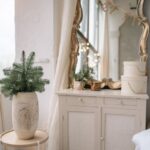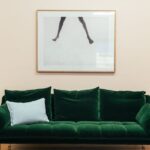
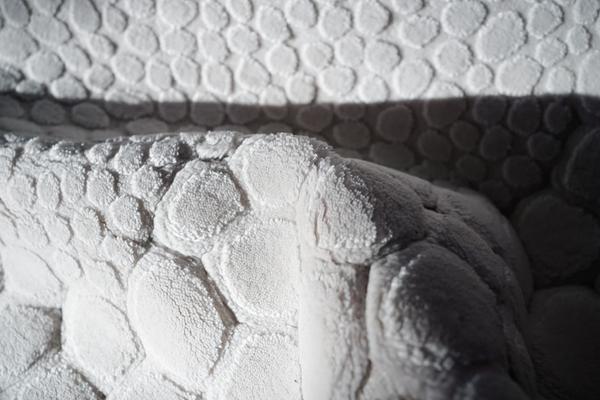
Layered texture interior design is what stops a room from feeling flat, even when the colour palette is quiet. A space can be almost entirely cream, beige, grey or soft green and still feel rich if its surfaces respond differently to light and touch. Linen, boucle, timber, wool, rattan, ceramic and brushed metal each add a different visual rhythm. The aim is not to fill every corner with decorative objects, but to build contrast through materials so the room feels warm and lived in.
For UK homes, this approach is especially useful because many rooms are compact and natural light changes dramatically through the year. Texture adds depth without relying on bold colour or oversized furniture, making it practical in terraces, flats and smaller bedrooms as well as larger spaces.
Start with a simple texture formula
A useful rule is to combine three levels of texture: one soft, one structured and one natural. For example, a smooth cotton sofa can be paired with a chunky wool throw and a rattan side table. In a bedroom, crisp bedding can sit beside a boucle bench and a timber bedside table. This keeps textured home decor intentional rather than busy.
Pay attention to scale. If every material has a heavy, nubby surface, the room can feel crowded. Mix fine textures such as linen or matte-painted walls with medium textures like woven cushions and stronger statements such as looped wool rugs or boucle furniture.
Living room: build depth around the seating
The living room is an easy place to experiment because there are already several layers to work with: sofa, rug, curtains, cushions, tables and lighting. Begin with the largest soft surface. If the sofa is smooth, introduce texture through cushions, a throw and the floor. If it is already heavily textured, keep some surrounding elements simpler.
Use boucle as an accent
Boucle furniture works best when it has breathing room. A cream boucle armchair beside a smooth cotton or leather sofa creates contrast; a whole suite of boucle pieces can feel heavy. A practical combination for a typical UK living room is a flat-weave wool rug, linen curtains, a smooth sofa, one boucle chair and an oak coffee table.
Bring in rattan carefully
Rattan interior ideas need not feel summery. A rattan lampshade, storage basket or cabinet door can add warmth and an open woven pattern year-round. Pair it with wool, timber and heavier curtains in cooler months so the room still feels grounded.
Bedroom: make softness the main layer
Bedrooms benefit from tactile home styling because texture can make the room feel calmer without adding visual noise. Start with bedding and work outward. Linen or washed cotton creates gentle movement, while a quilt, knitted throw or velvet cushion adds another level of softness.
Behind the bed, texture can come from an upholstered headboard, timber panelling or a softly plastered wall finish. Keep the balance restful: if the headboard is highly textured, choose simpler bedding; if the walls are plain, let the fabrics do more work.
Layer the bed without over-dressing it
Instead of piling on decorative cushions, use fewer pieces with different surfaces. Crisp cotton sheets, a linen duvet cover and one wool or boucle cushion can be enough. A woven bench or small rattan stool adds a natural material that contrasts with the fabric.
Dining room: combine hard and soft surfaces
Dining spaces naturally contain hard materials, so texture is often about softening them. A timber table can be balanced with upholstered chairs, a wool rug or linen curtains. Ceramics are especially effective because handmade or matte-glazed pieces bring subtle irregularity to a clean table setting.
Kitchen: use texture where it can handle daily life
In kitchens, practicality matters more than softness. Use texture through materials that are easy to clean and age well: timber stools, fluted glass, brushed metal, stone, ceramic tiles and woven blinds away from splash zones. Natural wood grain is particularly useful in white or grey kitchens because it breaks up hard, uniform surfaces.
For example, flat-front painted cabinetry can be paired with oak chopping boards, a ribbed glass pendant, a lightly veined worktop and a woven blind. The palette stays restrained while each surface reacts differently to light.
Bathroom: keep texture moisture-friendly
Bathrooms need materials that tolerate humidity, so the safest texture usually comes from tile, stone, timber-look finishes and washable textiles. A matte tile beside a glossy basin creates contrast without clutter. Ribbed or fluted glass can also introduce pattern while keeping the room clean and architectural.
Hallways and small spaces: texture instead of clutter
Narrow halls can become crowded when decoration relies on too many objects. A woven runner, timber console, ceramic lamp and matte wall paint can create layers without reducing usable space. In a small flat, repeat two or three materials from room to room, such as light oak, woven fibres and linen. Repetition creates continuity while variations in texture prevent monotony.
Common mistakes to avoid
The first mistake is treating texture as a shopping list. Adding boucle, rattan, velvet, wool, marble and brass all at once does not automatically create depth. Choose a smaller group of materials and repeat them. The second mistake is ignoring contrast. If everything is rough, nothing feels especially tactile; smooth surfaces are what make textured ones stand out.
Also consider maintenance. Deep-pile fabrics and heavily looped textiles may not suit homes with pets or young children. In busy areas, use washable covers, tighter weaves and hard-wearing natural materials.
Useful related topics to explore
Natural next reads include how to mix wood tones in one room, how to choose a living room rug, and how to decorate with neutral colours without making a space feel flat. Each builds on the same material-first approach.
FAQ
How many textures should you use in one room?
There is no fixed number, but three to five clearly different textures is often enough. The key is variety in surface rather than the number of objects.
Can you layer texture in a minimalist interior?
Yes. Texture is especially useful in minimalist rooms because it adds warmth without requiring extra colour or decoration. Linen, pale timber, wool and matte ceramics can create depth while keeping the scheme restrained.
Do rattan and boucle work together?
Yes. Boucle is soft and dense while rattan is open, structured and natural, so the materials provide useful contrast. Keep the colours related and let one material play the stronger role.
What is the easiest way to add texture without replacing furniture?
Start with textiles and lighting. A woven rug, linen curtains, wool throw, textured cushions or rattan lampshade can change the feel of a room without a major furniture purchase.
Let materials do the decorating
The most successful layered rooms are not the ones with the most finishes; they are the ones where each surface has a reason to be there. Use smooth materials to give rough ones contrast, repeat natural elements, and match texture to how the space is actually used. Layered texture interior design then becomes less about following a trend and more about creating rooms that feel warmer, deeper and more comfortable every day.