
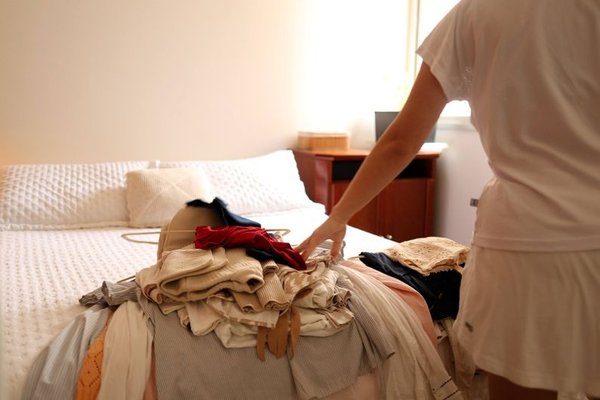
A whole-house declutter can feel overwhelming when every room seems to need attention at once. The easiest way to make progress is to stop treating the entire home as one project. Room by room decluttering turns a vague goal into a series of smaller decisions: finish one space, reset it, then move to the next.
This works best when you want more than a quick tidy. Instead of moving belongings around, reduce what you own, give the rest sensible homes, and build habits that make the result easier to maintain.
Start with a simple home reset plan
Before opening cupboards or filling donation bags, decide what “done” means for each room. Aim for usable surfaces, easy access to frequently needed items, and no unnecessary belongings taking up valuable space.
Use four decisions throughout the house: keep, relocate, donate or sell, and discard or recycle. Keep one box for items that belong elsewhere so you do not leave the room every time you find something.
Work in short sessions if needed. Thirty focused minutes on one defined area, such as a bedside table or bathroom cabinet, can be more productive than two hours spent moving between unfinished spaces.
Entryway: remove friction at the door
The entryway often becomes a landing zone for shoes, bags, post, keys, and coats. Remove anything unrelated to arriving or leaving. Keep current shoes and outerwear in rotation, and give keys, umbrellas, and outgoing parcels a specific place.
If paper accumulates near the door, use one temporary tray and empty it weekly. In a tight entrance, small-space storage ideas can help once the excess is gone.
Living room: protect the space you actually use
Living rooms collect objects because they serve several purposes. Begin with visible surfaces and the floor. Remove rubbish and dishes first, then put items that belong elsewhere into the relocation box.
Next, review books, toys, cables, blankets, electronics, and decorative items. Keep what you use or genuinely enjoy. If a drawer is packed with old chargers or remotes, match them to devices before keeping them.
Leave some empty space. Storage does not need to be filled to capacity. A partly empty shelf is easier to clean and gives future items somewhere to go without restarting the clutter cycle.
Kitchen: declutter by task
The kitchen is easier to reset when you think by task: preparation, cooking, serving, cleaning, and storage. Keep tools close to where each task takes place.
Start with obvious excess: expired food, duplicate utensils, damaged containers, lids without bases, gadgets you never use, and more mugs or glasses than your household realistically needs. Then review worktops. Appliances deserve permanent counter space only if they are used often enough to justify it.
For example, if you make coffee every morning but use a stand mixer once every two months, the coffee equipment should be easier to access. After reducing excess, learning how to organise kitchen cabinets can make that priority easier to maintain.
Bedrooms: make rest the priority
A bedroom should not become long-term storage for postponed decisions. Clear the floor, bedside tables, and any chair where clothes tend to gather. Put laundry where it belongs and remove objects that belong in workspaces or living areas.
When sorting clothes, use evidence rather than aspiration. If something is uncomfortable, damaged beyond repair, or has gone unworn through several appropriate seasons, consider letting it go. Keep enough room in drawers and wardrobes to put clothing away without forcing it into place.
Bathroom: reduce duplicates
Bathrooms can look organised while hiding clutter inside cabinets. Review toiletries, cosmetics, medicines, cleaning products, and grooming tools so you can see duplicates clearly.
Dispose of empty, spoiled, or unsuitable products. Medicines should be handled according to local disposal recommendations rather than automatically flushed or thrown into household rubbish. Group the remaining items by function, keeping daily-use products easiest to reach and backups together in a less prominent spot.
Home office and paperwork: make decisions visible
Paper clutter becomes stressful because every sheet seems to need attention. Sort it into broad groups: action needed, file, scan, shred, and recycle. Then process one group at a time.
Keep only records you genuinely need and follow relevant local guidance for financial, tax, legal, or medical documents. For the remaining workspace, home office organisation ideas can help you place everyday tools without refilling the desk.
Storage areas: declutter them last
Garages, lofts, basements, and spare cupboards may contain the most clutter, but they are usually better left until later. After you declutter each room, you understand what the household actually uses.
Do not use labelled boxes to avoid decisions. A neatly stored box is still clutter if its contents are unnecessary. Group seasonal, sentimental, maintenance, hobby, and household items separately, then decide how much space each category deserves.
How to make a whole house declutter last
A room decluttering guide is most useful when the result lasts. Make putting things away easier than leaving them out. Store frequently used items near their point of use, avoid complicated storage systems, and leave enough capacity for normal daily life.
Try a five-minute evening reset in the rooms that collect clutter fastest. Return objects to their homes and clear one main surface. For fast-growing categories such as shoes, mugs, or toys, a one-in, one-out rule can help.
Do not wait for the entire house to become cluttered again. When one drawer or shelf becomes difficult to use, treat it as an early signal rather than a future project.
Frequently asked questions
What is the best room to start decluttering?
Start with a room you use every day where visible improvement is possible quickly, such as the entryway, living room, or bedroom. Leave highly emotional storage areas until decision-making feels easier.
How long should I spend decluttering each room?
There is no ideal duration. A small bathroom may take less than an hour, while a kitchen or bedroom may need several sessions. Choose a defined stopping point before you begin, such as one cabinet, one wardrobe section, or one category.
Should I declutter or organise first?
Declutter first. Organising items you do not need wastes time and storage space. Once excess belongings are removed, it becomes much easier to choose sensible locations for what remains.
How can I declutter each room without creating a mess elsewhere?
Use one relocation box for items that belong in other rooms and empty it after the session. Keep donation and rubbish bags with you as you work. This prevents temporary piles from spreading around the home while you move through your home reset plan.
A calmer home, one finished room at a time
Room by room decluttering works because it replaces an intimidating whole-house project with a clear sequence of manageable resets. Finish one space, decide where its remaining belongings belong, and create enough breathing room for the room to function well.
You do not need a perfectly minimal home to feel the difference. A successful whole house declutter is one where your belongings support daily life instead of slowing it down. Let each completed room give you momentum for the next.