
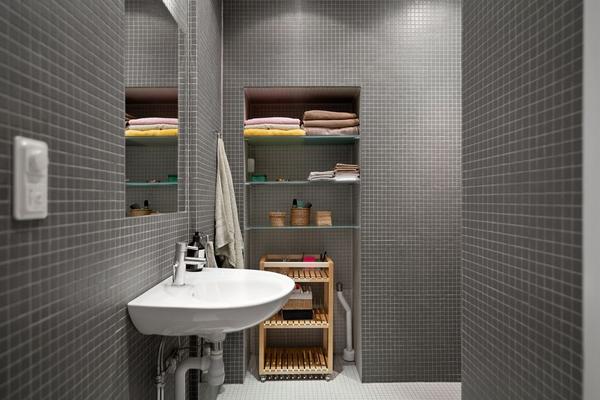
A small bathroom can feel crowded long before it is full. Bottles on the basin, spare rolls beside the toilet and towels hanging wherever they fit all compete for limited space. The best bathroom storage ideas for small spaces solve that problem without making the room harder to move around in. Think shallow rather than bulky, concealed where practical, and close to where each item gets used.
Before buying another basket, separate daily essentials from occasional supplies. This helps you add storage where it earns its place rather than filling every gap.
Start with the way you use the room
Good small bathroom storage follows your routine. Keep toothbrushes and daily skincare near the basin, shower products in the shower, and clean towels within reach. When essentials have convenient homes, surfaces collect less clutter.
Stand at the sink and imagine opening every cupboard, drawer and door. A unit that blocks your knees or prevents the bathroom door opening fully is not a space-saving solution. Measure width, depth and opening clearance before ordering.
Use wall space carefully
Choose a mirrored bathroom cabinet
A mirrored bathroom cabinet replaces a flat mirror with storage in almost the same position. Shallow adjustable shelves hold grooming products and small toiletries while keeping the basin clear. Check the depth: a bulky cabinet above a tiny sink can feel intrusive when you lean forward.
If a recessed cabinet is impractical, a slim surface-mounted model may fit. Make sure its door clears nearby walls and lights. Follow storage instructions for medicines; a steamy bathroom is not always suitable for them.
Add shelves away from traffic
Open shelves work best above the toilet, beside the vanity or on walls people do not brush past. One or two shallow shelves generally look calmer than a stack of deep ones. Use them for folded hand towels or frequently used products, rather than dozens of bottles.
For rented spaces, adhesive accessories may suit lightweight items on compatible surfaces. They cannot replace securely fixed shelving supporting heavy objects.
Make the basin area work harder
Look underneath first
A wall-hung basin exposes floor space but can leave usable room underneath. A fitted undersink cabinet or compact organiser can hold cleaning supplies and spare toiletries. Keep access to plumbing, allow for potential leaks and choose splash-tolerant materials.
If you are replacing the basin, a vanity with drawers often makes better use of a compact footprint than a cupboard with one large cavity. Drawers bring small objects forward instead of leaving them buried behind bottles.
Use cabinet doors too
Lightweight door-mounted holders can organise brushes, hair accessories or cleaning cloths. Check that the door closes without hitting shelves or pipes. For narrow cupboards, divided containers may be simpler than complicated pull-out mechanisms.
When considering small bathroom layouts, remember that accessible storage matters more than the number of compartments. Leave comfortable routes between the sink, toilet and shower.
Find slim bathroom storage for awkward gaps
The strip beside a vanity or between a toilet and wall might accommodate a narrow cabinet or rolling trolley. Slim bathroom storage uses spare width without taking much floor area. Choose closed fronts for spare rolls and cleaning products; a trolley helps only when it pulls out easily.
Imagine a 15 cm gap beside a compact vanity. A cabinet advertised as 15 cm wide may catch on skirting boards or pipework. Measure at several heights and allow room for drawers. A slightly narrower unit that works smoothly beats a perfect-width purchase that gets stuck.
Secure tall, narrow furniture according to its instructions, especially around children. Floor-level units should allow for cleaning and not trap water.
Use the wall above the toilet
An over-toilet cabinet or shallow shelves can hold spare towels and toilet paper. Keep depth modest so someone standing up will not hit their head, and preserve access to the cistern for maintenance.
Wall-mounted cabinets can look neater than a frame standing around the toilet, provided the wall and fixings are suitable. If drilling is impossible, choose a stable unit designed for this position and follow anti-tip guidance. Avoid heavy objects on high shelves.
Give shower products their own place
Plan a recessed shower niche during renovation
A recessed shower niche keeps shampoo and soap off the floor without projecting into a narrow enclosure. Position it where bottles are easy to reach, and check the height against products you actually use.
A niche is not a simple cut-out: it must suit the wall construction and connect correctly to the shower’s waterproofing system. Have a competent bathroom professional plan and install it. Poor detailing can cause hidden moisture damage.
Choose removable storage for an existing shower
Without a renovation, use a compact caddy or wet-area shelf that does not obstruct doors, controls or movement. Follow its mounting and weight instructions, and inspect fittings because moisture and repeated loading can weaken some fixings.
Make towels easier to store and dry
Hooks behind the door or on a suitable wall use less space than a bulky rail. Give damp towels room to dry rather than piling several onto one hook. Where ventilation is poor, a spaced towel rail may work better.
Not every spare towel needs to live in the bathroom. Keep a small supply nearby and move extras to a drier cupboard. That decision can free more space than another shelf.
Choose storage that looks calm
Small bathrooms benefit from fewer visible objects. Match containers to shelf depth, group essentials on one tray and use doors for visually busy supplies. Choose moisture-resistant finishes and avoid crowding damp items into sealed spaces.
If the room still feels cramped, bathroom lighting ideas can improve visibility, while bathroom vanity ideas may help you select better built-in storage during a refit. Neither replaces enough clearance to move comfortably.
Frequently asked questions
How can I add bathroom storage without drilling?
Try a compact freestanding undersink organiser, a stable slim trolley or lightweight over-door accessories. Check door clearance, splash resistance and weight limits. Use adhesives only on compatible surfaces.
Are open shelves or cabinets better in tiny bathrooms?
Cabinets conceal clutter and shield spare supplies from splashes. Open shelves provide quick access but need more tidying. Combining a closed cabinet with one short open shelf often works well.
Is a recessed shower niche worth installing?
It can save shower space during an existing renovation. The benefit depends on placement, suitable wall construction and correctly installed waterproofing. It is rarely worth opening a finished shower wall for storage alone.
Where should spare toiletries go?
Keep a modest backup in a closed cabinet or drawer away from direct splashes. Bulk stock can go in a drier cupboard outside the bathroom, leaving the small room for everyday needs.
Make every centimetre useful
Effective storage is about reducing friction, not filling every corner. Start with sink and shower essentials, then consider shallow wall storage, an awkward-gap cabinet or over-toilet shelving. The right combination leaves clear floor space, accessible supplies and a bathroom that is easier to use.